
The monument · Last reviewed 6 September 2026
The mosaics of Hagia Sophia rank among the finest surviving examples of Byzantine art. Created over several centuries, they once covered large areas of the interior with glittering images of Christ, the Virgin, angels and emperors. Although many were damaged, covered or lost during periods of iconoclasm, Latin occupation and later Ottoman whitewashing, enough remain visible today — especially from the upper gallery — to reward careful looking.
How Byzantine mosaics were made
Byzantine mosaics were not engraved or carved. They were assembled from thousands of tiny cubes called tesserae, set by hand into wet mortar. The materials and methods were highly refined.
The most characteristic tesserae were made of glass. For the gold backgrounds — the radiant fields that surround sacred figures — craftsmen placed a thin sheet of gold leaf between two layers of glass and fused them. When light struck these gold tesserae it reflected through the glass and created the luminous, otherworldly glow that still impresses visitors. Silver leaf was used in a similar way for cooler highlights.
Other tesserae were cut from coloured glass, natural stone, marble and occasionally terracotta or mother-of-pearl. The cubes were deliberately set at slight angles rather than flush with the surface. This technique caught and scattered light, making the images appear to shimmer as the viewer moved or as the daylight changed.
The mosaicists worked on scaffolding, pressing each tessera into a bed of fresh lime-based plaster. Larger compositions were often prepared with underdrawings. The entire process demanded exceptional skill in colour matching, facial modelling and the control of light — qualities that reached a peak in the mosaics of Hagia Sophia.
The apse mosaic: the Virgin and Child
High in the apse, above the area of the former sanctuary, sits one of the most important images in the building: the Virgin Mary holding the Christ Child. Created in the second half of the ninth century after the end of Iconoclasm, this mosaic reasserted the legitimacy of religious images. The Virgin sits on a backless throne, presented as the Theotokos, the God-bearer. The solemn, frontal composition and the gold background emphasise her theological significance. Although partially restored, the mosaic remains a powerful focal point when viewed from the nave or from the galleries.
The Imperial Door mosaic
Above the central Imperial Door in the inner narthex is a famous tenth-century mosaic showing an emperor, most often identified as Leo VI, prostrating himself before an enthroned Christ. An inscription invokes the mercy of God. The scene combines imperial humility with divine authority and would have been the last image an emperor saw before entering the nave for major ceremonies. The modelling of the faces and the rich use of gold tesserae demonstrate the high technical standard of the period.
The Deesis mosaic
Located in the south gallery, the Deesis is widely regarded as the artistic masterpiece among the surviving works. Dating to the late thirteenth century, after the Byzantine recovery of Constantinople in 1261, it depicts Christ Pantocrator in the centre, flanked by the Virgin Mary and John the Baptist, who intercede on behalf of humanity. The faces are rendered with remarkable psychological depth and soft transitions of colour. Many art historians consider the Deesis one of the greatest achievements of late Byzantine mosaic art, and its location in the upper gallery makes it one of the highlights of the modern visitor route.
Imperial portrait mosaics
Several mosaics in the galleries portray Byzantine emperors and empresses offering gifts to Christ or to the Virgin. Notable examples include:
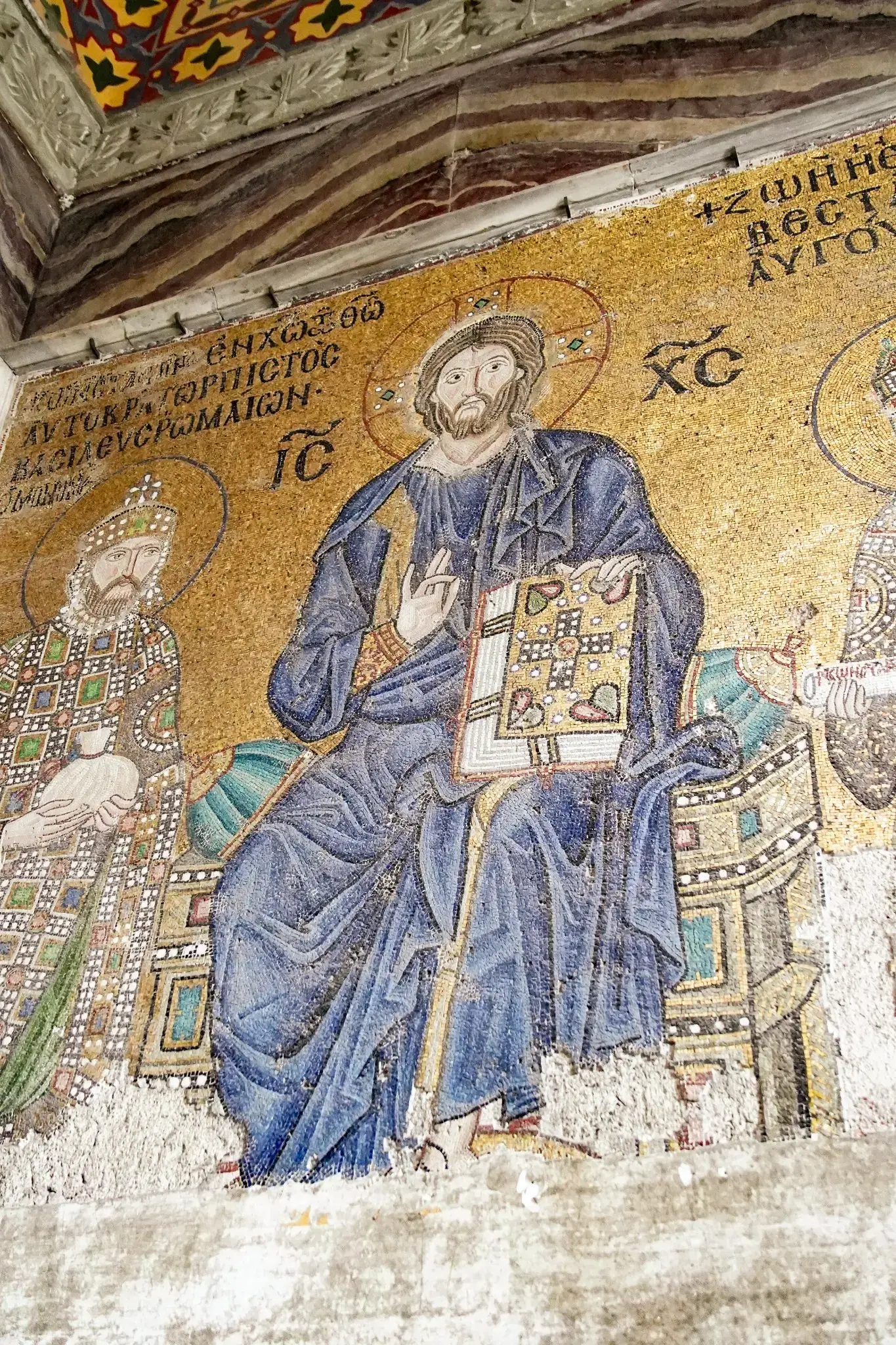
- Constantine IX Monomachos and the Empress Zoe.
- John II Komnenos and the Empress Irene, with their son Alexios.
These panels served both religious and political purposes, visually linking the ruling dynasty to divine favour. The careful depiction of imperial costume and the use of gold and coloured glass illustrate the continuing technical excellence of the mosaic workshops.
Other surviving fragments
Additional mosaics and fragments can still be seen, including figures of archangels and decorative borders. Many more once existed: historical accounts describe a far richer decorative programme that covered vaults, walls and arches before successive losses.
Looking at the mosaics today
Most of the major mosaics are best appreciated from the upper gallery, the route used by ticketed visitors. Natural light from the windows continues to animate the gold tesserae just as the original artists intended. Because the cubes were set at angles, the images change subtly as you move past them — a deliberate optical effect that rewards slow, attentive viewing.
The mosaics of Hagia Sophia are more than decoration. They are theological statements, imperial propaganda and technical marvels made with glass, gold leaf, stone and extraordinary skill. Looking carefully at the Virgin in the apse, at the emperor before Christ and above all at the Deesis allows modern visitors to encounter the spiritual and artistic world of Byzantium at its height.